GODZILLA FIELD REPORT No. 3
On silence, experimentation, trust, and the fact that time and space are Big
New to the Mission? Start Here: Mission Kaiju_Love_Care_Futures_02026 Site Index
INCOMING TRANSMISSION / / /
We received your note that some members of the public are asking about our methodology. Perhaps we can publish a version of this on the public-facing knowledge repository? We will make sure that the Field Office copy of our Research Methodology is up-to-date and send to you for review. This is a good opportunity to make sure our copies match, anyway.
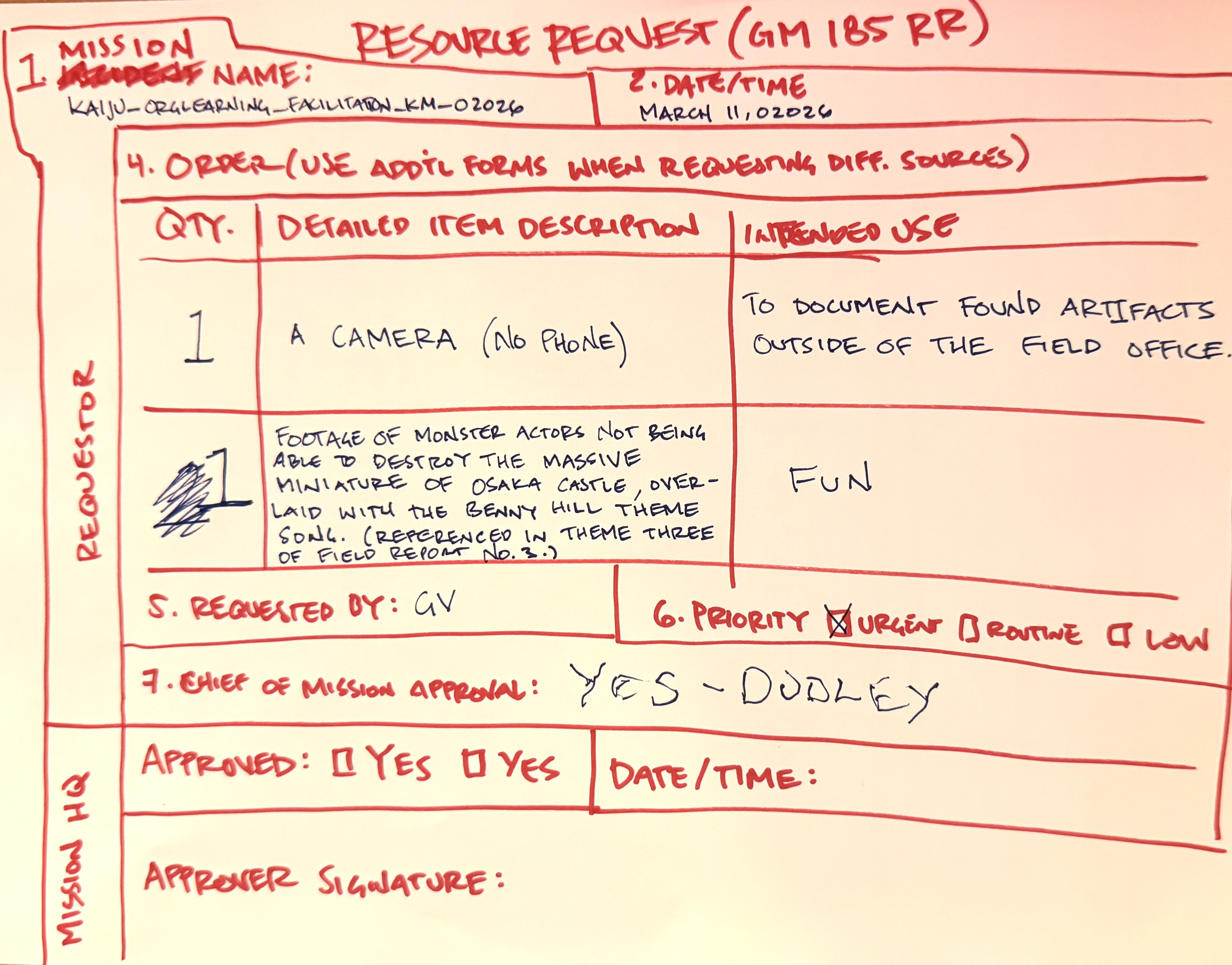
For the sake of transparency: yesterday, during the Chief of Mission’s mandated morning walk, we identified a potential artifact for inclusion in our research. It had the appearance of a crushed beer can that was printed with an artist’s rendition of Godzilla. Unfortunately, we had already used our standard issue on-walk bag for the Chief of Mission’s usual business, and—regrettably—none of us had a camera. The Chief of Mission prefers that we use these walks as an opportunity to—as he says—stay ‘present.’ Might HQ provide us with a camera that is not attached to a cellular device? We do not want to go against the Chief of Mission’s wishes, but if it is still there, this artifact seems important for the mission. We have completed the requisite resource request form (Form GM_185_RR) and included it with this Field Report.
NOTE FROM MISSION HQ: we are actively seeking contributors to this mission. Please share with Godzilla scholars and citizen-scientists.
GODZILLA FIELD REPORT No. 3
Date: March 11, 020261
Location: Brooklyn
Mission: Kaiju_OrgLearning_Facilitation_KM_02026
Artifacts Examined:
Pages 39 - 53: Godzilla Raids Again (1955), Chapter One of Part One: Beast of Burden: 1954 to 1975 of Ryfle, S., 2, E., Carpenter, J., Odaka, M., & Tomiyama, S. (2025). Godzilla: The First 70 Years: The Official Illustrated History of the Japanese Productions. Abrams Books.
Pages 20 - 25: Godzilla Raids Again (1955), of Skipper, Graham. (2022). Godzilla: The Official Guide to the King of the Monsters. Welbeck Publishing.
Rations Consumed: one large apple, two spoons of peanut butter, an espresso.
Chief of Mission (AKA Dudley the Dog) Present? Yes.
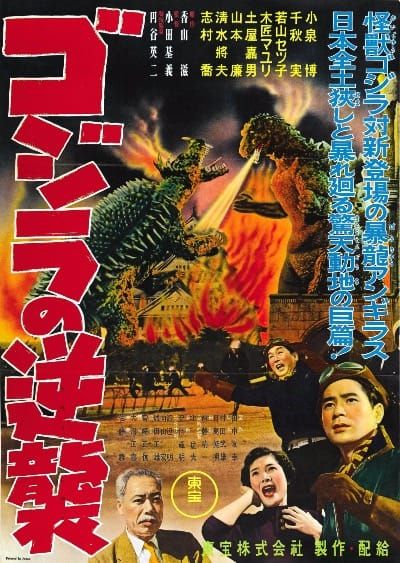
While we’ve shared with you our initial understanding of Godzilla Raids Again (1955) in our first field report, we are happy to report that the film is about much more than preparing one’s ancient reptile for hibernation by burying it in ice.
We have discussed and agreed upon six themes in Godzilla Raids Again—we are beginning to think we were too hasty in our last transmission to propose that the seven themes we found in Godzilla (1954) would apply to the entire mission. We know we are still early in the information gathering phase of our work, and we will try to be more patient.3
The six themes in Godzilla Raids Again are:
- Silence says a lot
- Unintended outcomes come in many forms
- Experimentation is worthwhile
- Trust the people closest to the work
- Relationships change over time
- Time and space are big, we are small
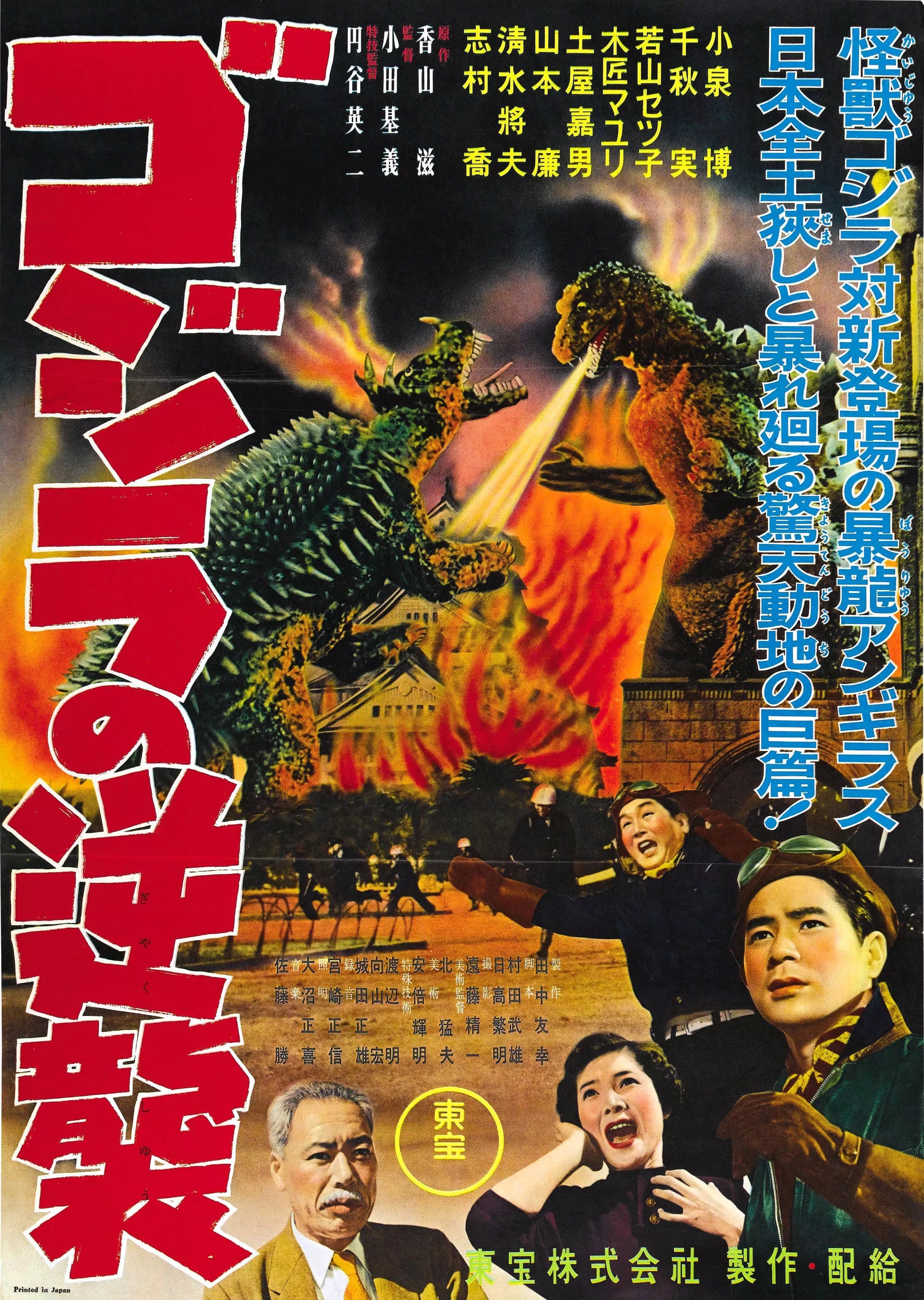
THEME ONE: Silence says a lot
The score of Godzilla Raids Again was composed by Masaru Sato, and it’s filled with silences and tension. Ryfle and Godziszewski offer:
Like Ifukube’s work on the prior film, Sato’s music is especially impactful when it breaks through silence. A long military buildup along the waterfront anticipating the monsters’ arrival is accompanied by no music and only sparse dialogue and the intermittent roar of jet squadrons patrolling the airspace … When Godzilla surfaces offshore, Sato announces its arrival with brash, shimmering cymbals. Low, guttural orchestral sounds rumble as the [jet squadrons] light up the sky with flares, luring Godzilla back out to sea … - pg 45, The First 70 Years
As we know from others’ scholarship (in the context of facilitation, history, and the work of building equitable systems and worlds): what’s not said is just as important as what is said. As academics, we tend to focus on what we can see and hear. We posit that our scholarship (as well as the greater field of Philanthropy and Godzilla Research) would benefit from greater attention to silences. If we may reference other non-Godzilla material: As Lorgia Gargia Peña reminds us in Translating Blackness: Latinx Colonialities in Global Perspective:
Michel Foucault writes that archives are the “law of what can be said.” They are what organize hierarchies of time and statements of truth and are also locations of power that grant historians credibility. For historians, the archive is the place of legitimacy where their “truth” is sanctioned. But as many scholars of critical archival studies have noted, traditional archives, heritage institutions, and historical publications are filled with silences regarding the lives, agency, participation, and cultural production of Black people. The process of silencing, as Michel-Rolph Trulliot reminds us, begins at the source of creation, not at the archive.
While Garcia Peña is speaking specifically to the systematic and intentional silencing of Black people and their histories on the part of Dominant Culture historians and the State—and we do not wish to minimize this—we believe that this logic applies to many stories, histories, and experiences of marginalized peoples. As we will argue in later Field Reports, this pattern is especially obvious in American re-edits of Japanese Godzilla films.
THEME TWO: Unintended outcomes come in many forms
This theme appears both in the film and in the making of the film.
In the film:
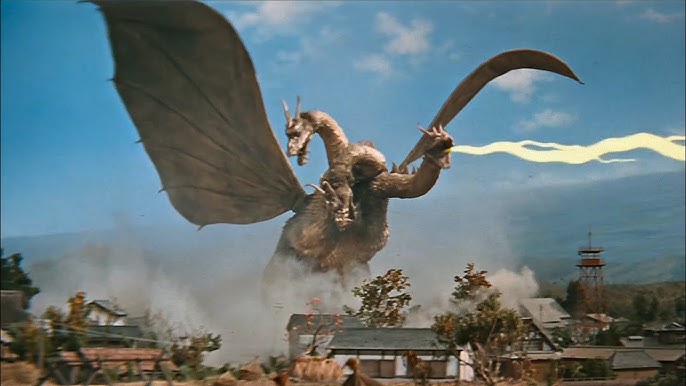
“..the Japan Air Self-Defense Force (JASDF) lights up the sky with flares, luring Godzilla back out to sea but inadvertently drawing Anguirus ashore.” - pg 45, The First 70 Years
As the professionals say: “Oops.”
In the making of the film:
During the Osaka battle sequence, the monsters move noticeably faster at times, with a lightning swiftness owing to an unintended change in camera speed that was, as it turned out, a happy accident. …
“There were three cameras-A, B, and C-and it was ordinary to shoot Godzilla at high speed” to create the slow movement associated with such large creatures, said special effects cameraman Sadamasa Arikawa. “But camera C wasn’t set at high speed.... When we saw the dailies, cameras A and B were on the right setting, but camera C’s Godzilla moved quicker.” Eiji Tsuburaya was alarmed, but after examining the footage closely, he concluded, “Wait a minute. That movement’s not that bad. Maybe we can use it.” - pg 46, The First 70 Years
As you all know, we think one of the most exciting phenomena in our work is when we can say, “Wait a minute. That’s not that bad. Maybe we can use it.” In our collective experience, what starts off as a perceived mistake or tangent might actually be the key to answering a previously unanswerable question.
THEME THREE: Experimentation is worthwhile
Bolstered by the success of their work on Godzilla (1954), the special effects team was far more well-resourced for Raids Again.
[Stages No. 8 and No. 9 on the studio lot were] two enormous buildings dedicated to shooting special effects scenes; this was evidence of Tsuburaya’s growing influence and the studio’s plan to ramp up production of tokusatsu films and expand Into widescreen productions. The stages took about a year to complete and totaled about 1,000 tsubo (roughly 35,000 square feet/3,252 sq m), with high ceilings and vast, open interiors that enabled Tsuburaya to build bigger miniature sets and film them from higher and wider angles. - pg 46, The First 70 Years
You all know that those of us at the Field Office are strong believers in experimentation. We know most of you at Mission HQ disagree, but we believe our research benefits greatly when we take a Big and Weird4 approach to our work.
In The Official Guide to the King of the Monsters, Godzilla scholar Graham Skipper describes one intriguing result of Toho’s investment in Tsuburaya’s experimentation:
...Tsuburaya crafted detailed hand puppets, as well as a massive miniature of Osaka Castle that would prove so hardy that the actors had a difficult time destroying it once constructed. - pg 24, The Official Guide
You’ll see that, in addition to our request for a non-cellular-device-camera, we’ve included a request for the archivists assigned to our mission. More detail is in Form GM_185_RR (attached) but here’s the gist:
If footage of this exists, will they please:
Add the Benny Hill theme song5
Include this in the next shipment of artifacts
If you have concerns about copyright, let us reassure you that we will not share this with anyone outside of the Field Office.
All of this is to say: experimentation is worthwhile.
THEME FOUR: Trust the people closest to the work
The special effects department was not the only one gaining respect and agency:
As evidence of Tsuburaya’s growing respect for Haruo Nakajima’s dedication to playing Godzilla, the stuntman was given full responsibility for choreographing the monsters’ struggle. “There was a sword-fighting choreographer for jidai-geki (samurai movies), but there was no monster-fighting choreographer back then,” Nakajima recalled. “So I was the first one. Tsuburaya told me, ‘Do whatever you want.’ It was such a responsibility! I was freaking out, but I was happy that he trusted me that much. ... I choreographed the monsters moving up and down, glaring at each other, lunging and wrestling, etc., just like a jidai-geki fight.” - pg 46, The First 70 Years
This is an example of great role clarity, trust, and ownership that many of us wish to see more of in the field of Philanthropy. By trusting Nakajima to take ownership as the first ‘monster-fighting choreographer,’ Tsuburaya put into practice an idea that many in Philanthropy are still working to figure out: he ceded his power to the person closest to the work in question.6
THEME FIVE: Relationships change over time
Relationships change over time. This is a universal truth that we can see through an examination of Shigeru Kayama’s relationship with Godzilla. Kayama was a novelist, poet, and screenwriter, and he is the man responsible for the original story treatments for Godzilla (1954) and Godzilla Raids Again (1955). Ryfle and Godziszewski describe this change:
Godzilla’s survival left open the possibility of more sequels, but writer Shigeru Kayama made it clear he would not be back. “What had started as a symbol representing his fear of atomic weapons had morphed into a character that produced feelings of intimacy and closeness from the viewing audience,” writes Kayama biographer Jeffrey Angles. “Viewers sympathized with the monster [when it) was destroyed.” Kayama, too, felt sorry for the way Godzilla suffered; watching the monster melted by the Oxygen Destroyer and then covered in ice had given him nightmares. “I have firmly decided not to write any sequels,” Kayama concluded. “No matter how much the film studio may ask. - pg 49, The First 70 Years
Not only do relationships change, but the meaning of art morphs the moment it is disseminated to the public.We must admit: for all of us, this passage brought with it a deep sadness. During our artifact review, whenever Godzilla suffers, we feel that same melancholy. It is crucial to note that we do not wish for the people in these films to suffer, either!
While we have Big Feelings about the suffering, we suppose that the Godzilla archives might be considerably smaller in volume had Godzilla and the people of Japan simply shared a picnic.7
THEME SIX: Time and space are big, we are small
Theme six, while related to theme three (experimentation is worthwhile), is presented as the final theme because of its bigness.
Ryfle and Godziszewski describe the final battle scene in Godzilla Raids Again:
Godzilla’s battle with fighter planes, partly shot on an outdoor set, includes innovative views of the monster, filmed at low angles, with snow-capped peaks towering above, alternately highlighting the monster’s immense size compared to man and its relative smallness in the scheme of nature. - pg 46, The First 70 Years
If you will allow us a moment of wonder: “...alternately highlighting the monster’s immense size compared to man and its relative smallness in the scheme of nature” has struck those of us at the Field Office in the most profound way. Not only does this highlight the importance of honoring multiple perspectives, but it brings to mind our fellow scholar Carl Sagan’s assertion that we on earth live on a pale blue dot:
“The Earth is a very small stage in a vast cosmic arena. … Our posturings, our imagined self-importance, the delusion that we have some privileged place in the Universe, are challenged by this point of pale light. Our planet is a lonely speck in the enveloping cosmic dark. In our obscurity, in all this vastness, there is no hint that help will come from elsewhere to save us from ourselves. …To me, it underscores our responsibility to deal more kindly with one another, and to preserve and cherish the pale blue dot, the only home we’ve ever known.” - Carl Sagan, Pale Blue Dot, 1994
It strikes us that it may be prudent for this mission to catalogue the non-Godzilla scholarship that influences our research and synthesis. Not only would this include Carl Sagan, but works by bell hooks, adrienne maree brown, David Graeber, and David Wengrow. We will include this Auxiliary Bibliography as an Appendix to the Research Methodology document for your review.
In our last transmission, we shared that we are beginning to wonder if we might expand our scope, as we believe that the Godzilla franchise can teach everyone about love, care, and building a future that works for all. This is quickly becoming an unavoidable topic. Please advise on the best next steps to begin the scope change process.
Morale remains high—as you’ll recall from our last transmission, many of us were full of dread at the prospect of reviewing the artifact titled Godzilla, King of the Monsters!. As you can surmise, we survived.8 The Chief of Mission offered no direct help (though he did make sure to alert us to passersby outside the Field Office.)
Rations are holding up, though perhaps you can include cutlery in your next shipment? If that is an impossibility, a roll of paper towels will suffice.
Yours in Science,9
The Godzilla Field Office
/ / / END OF TRANSMISSION
POSTSCRIPT: SABOTAGE TRACKER
Mercifully, things have been quiet on this front. We are slightly concerned, though, that the man might be preparing for sabotage on a larger scale. We will keep our wits about us.
ATTACHMENT: RESOURCE REQUEST FORM GM_185_RR
The mission team learned this “Long Now” formatting from the author and artist behind the publication called Seed & Signal™. Mission supporters are encouraged to subscribe. ↩
We have just now noticed that one of the co-author’s name is remarkably similar to Godzilla’s. You don’t suppose Godzilla himself contributed to his biography under a fairly conspicuous pen name, do you? Perhaps the Conspiracies Department at HQ could launch an inquiry into this? ↩
One of our Research Assistants warned us this would happen, and would like that noted in this footnote. ↩
Or, as an early supporter of this mission lovingly describes it: “Insane.” ↩
Perhaps the AV team can support? ↩
The Human Centered Leadership Collaborative is really good at helping organizations do this. ↩
A large dock or a pier might serve as a shared picnic table. ↩
Barely. More context to come in Field Report No. 4. ↩
This mission is dedicated to the memory of Harvey Rowe. ↩