GODZILLA FIELD REPORT No. 5
Five lessons from Mothra vs. Godzilla (1964) for humanity regarding greed, abolition, lifecycles, the virtue of being stubborn, and eggs
New to the Mission? Start Here: Mission Kaiju_Love_Care_Futures_02026 Site Index
INCOMING TRANSMISSION / / /
Due to budgetary constraints and the corporate knowledge hoarding that is a key component of capitalism, we have not been able to access King Kong vs. Godzilla (1962), so this field report explores lessons for humanity offered in Mothra vs. Godzilla (1964). We hope you will keep promoting the Mission Patron program so that we might have the resources to access each artifact selected for review.
We acknowledge receipt of your direction to meet the photographer this morning. We promise that we will be professional. That said, we are curious as to how the Mission can afford a photographer and not Criterion’s Godzilla: The Showa-Era Films, 1954 - 1975 Box Set.
As directed, what follows is a rewrite of our first draft. While you’ll see we offer five lessons for humanity, we still believe that Mothra vs. Godzilla (1964) is about eggs.
GODZILLA FIELD REPORT No. 5
Date: March 27, 020261
Location: Brooklyn
Mission: Kaiju_Love_Care_Futures_02026
Artifacts Examined:
Mothra vs. Godzilla (1964)
Pages 68 - 81: Mothra vs. Godzilla, Chapter One of Part One: Beast of Burden: 1954 to 1975 of Ryfle, S., Godziszewski, E., Carpenter, J., Odaka, M., & Tomiyama, S. (2025). Godzilla: The First 70 Years: The Official Illustrated History of the Japanese Productions. Abrams Books.
Pages 36 - 43: Godzilla: King of the Monsters! (1956), of Skipper, Graham. (2022). Godzilla: The Official Guide to the King of the Monsters. Welbeck Publishing.
Number of Times We Cried About How Beautiful Mothra is: 4.5
Rations Consumed: three espressos, one bag of popcorn, an apple, three spoonfuls of peanut butter
Chief of Mission (AKA Dudley the Dog) Present? Yes
In addition to being a film about eggs, Mothra vs. Godzilla is a film that offers lessons about the perils of greed and capitalism, abolition of violent carceral systems, the passage of time, and the virtues of being stubborn.
Below, we offer five lessons for humanity so that we might build a more just and equitable future.
LESSON FOR HUMANITY No. 1: Don’t Be So Greedy
A violent typhoon opens the film. The torrential downpour knocks sediment loose, and in the aftermath, we see a giant egg floating off the coast of Shizunoura. This is the first—but nowhere near the last—egg sighting throughout the film.
A businessman named Kumayama and his financial backer Jiro Torohata “buy” the egg with intentions to turn it into an amusement park for Happy Enterprises. We use quotes here because one should not be able to “buy” something that is not for sale.
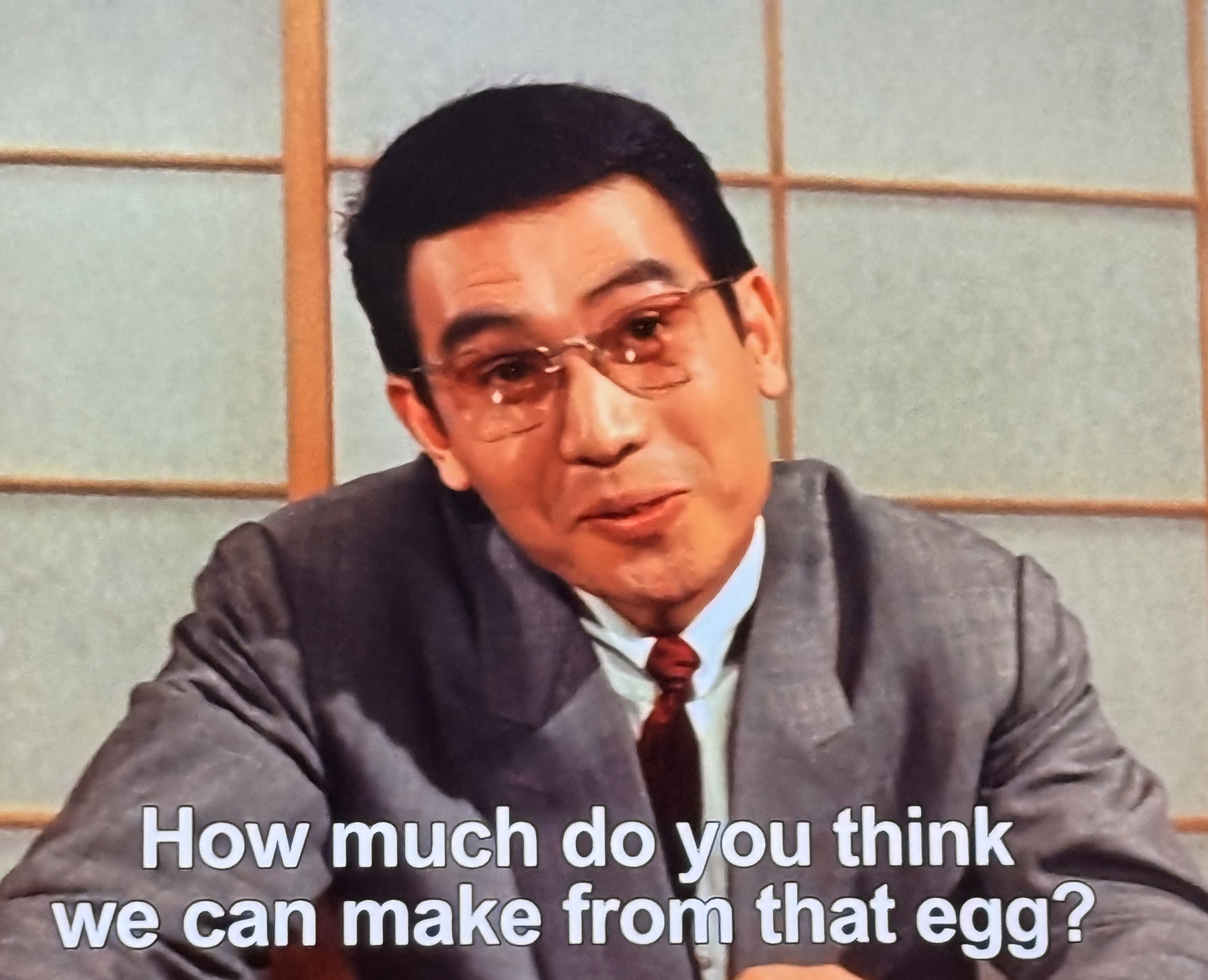
During our artifact review, we were struck by how realistic Kumayama and Torohata’s behavior was—this did not feel like an overplayed bit. In The First 70 Years, Ryfle and Godziszewski give us a peek into the actors’ process:
Actors Tajima and Sahara, both playing against type, relish their roles; Sahara went so far as to research the part by hanging out with pushy real estate speculators. - pg 76, The First 70 Years
These characters are not extreme tropes. These characters offer archetypes for many people in power across the world. Here are some thoughts that we at the Field Office are sitting with:
Exploitation of other living beings is more possible when humans consider themselves as separate from nature instead of a part of (and interdependent with) nature. As it is written in the Mission Log: “Classic rich guy behavior.”
The principles underlying our ideas of ownership: as David Graeber and David Wengrow demonstrate in The Dawn of Everything, our society’s understanding of ownership is based on the Roman principle of Dominium:
What makes the Roman Law conception of property - the basis of almost all legal systems today - unique is that the responsibility to care and share is reduced to a minimum, or even eliminated entirely. In Roman Law there are three basic rights relating to possession: usus (the right to use), fructus (the right to enjoy the products of a property, for instance the fruit of a tree), and abusus (the right to damage or destroy). If one has only the first two rights this is referred to as usufruct, and is not considered true possession under the law. The defining feature of true legal property, then, is that one has the option of not taking care of it, or even destroying it at will. -pg 161, The Dawn of Everything (emphasis our own)
In this instance, ownership is inherently violent. The Happy Enterprises businessmen “owned” Mothra’s Egg because they believed they had a right to use, enjoy, and destroy (or exploit) it.
Eggs. We are thinking about eggs.
LESSON FOR HUMANITY No. 2: Even Bad People Have a Right to Live
This lesson is a direct line from the film, spoken in the context of impending destruction: Mothra is on her way to fight Godzilla, and bystanders are sure to be hurt. Some of these bystanders are innocent. Some (like the Happy Enterprises businessmen) are decidedly not.
While the dichotomy of “good” and “bad” is a false one that is firmly rooted in white supremacy, we interpret “bad” in this instance as: “people who have caused harm.”
We interpret this as a call for the abolition of the death penalty, and by extension, all carceral and punitive systems. This is not an argument to rid the world of accountability, but to practice accountability in loving, generative ways.
While harm should be addressed and abusers should be held to account, punishment and state-sanctioned carceral violence is not accountability.2 Our more ‘tame’ colleagues at Mission HQ might take issue with this, but you are the ones who asked for more lessons than “eggs.”
All of this said, we were not disappointed when the greedy businessmen met their demise. Multiple things can be true at once.
LESSON FOR HUMANITY No. 3: All Things End, and Time is a Spiral
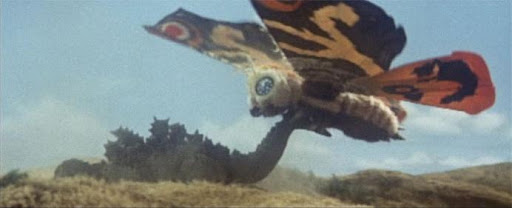
Knowing she is at the end of her lifecycle, Mothra uses the last of her strength to keep Godzilla away from her egg. As we saw her take her last breath, many of us were moved to tears. To borrow a phrase from baseball fans, the special effects team led by Eiji Tsubaraya “knocked this one out of the park.”
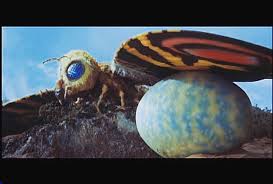
While Godzilla tries to recover, the Shobijin—tiny twin fairies who accompany and speak for Mothra—sing Mothra’s song to encourage Mothra’s egg to hatch.
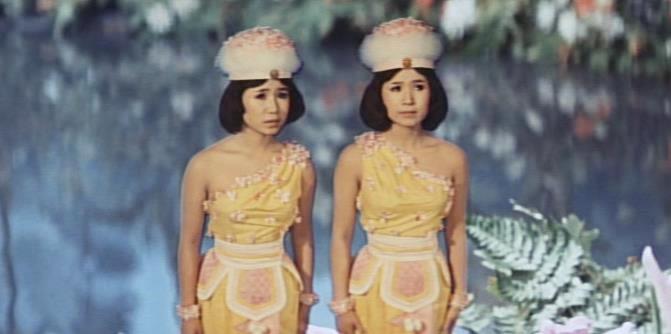
The egg hatches, indeed, and it’s Mothra twins! Mothra—like love—never truly dies.
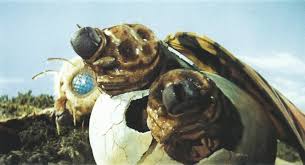
What’s remarkable about this moment is not just that Mothra is reborn as twins. What’s also remarkable is the Shobijin’s stewardship of ritual, memory, and care as the next iteration of Mothra came into the world to stop Godzilla.
Time is a spiral. Things end, but so too do they begin.
LESSON FOR HUMANITY No. 4: Be More Stubborn. Be Blatant. Be Emotional. Risk Everything.
Mothra’s home, Infant Island, is an island in the Caroline Islands of the North Pacific that has been devastated by nuclear testing. The film’s protagonists walk among the bones of former Infant Island residents, killed by nuclear bombs.
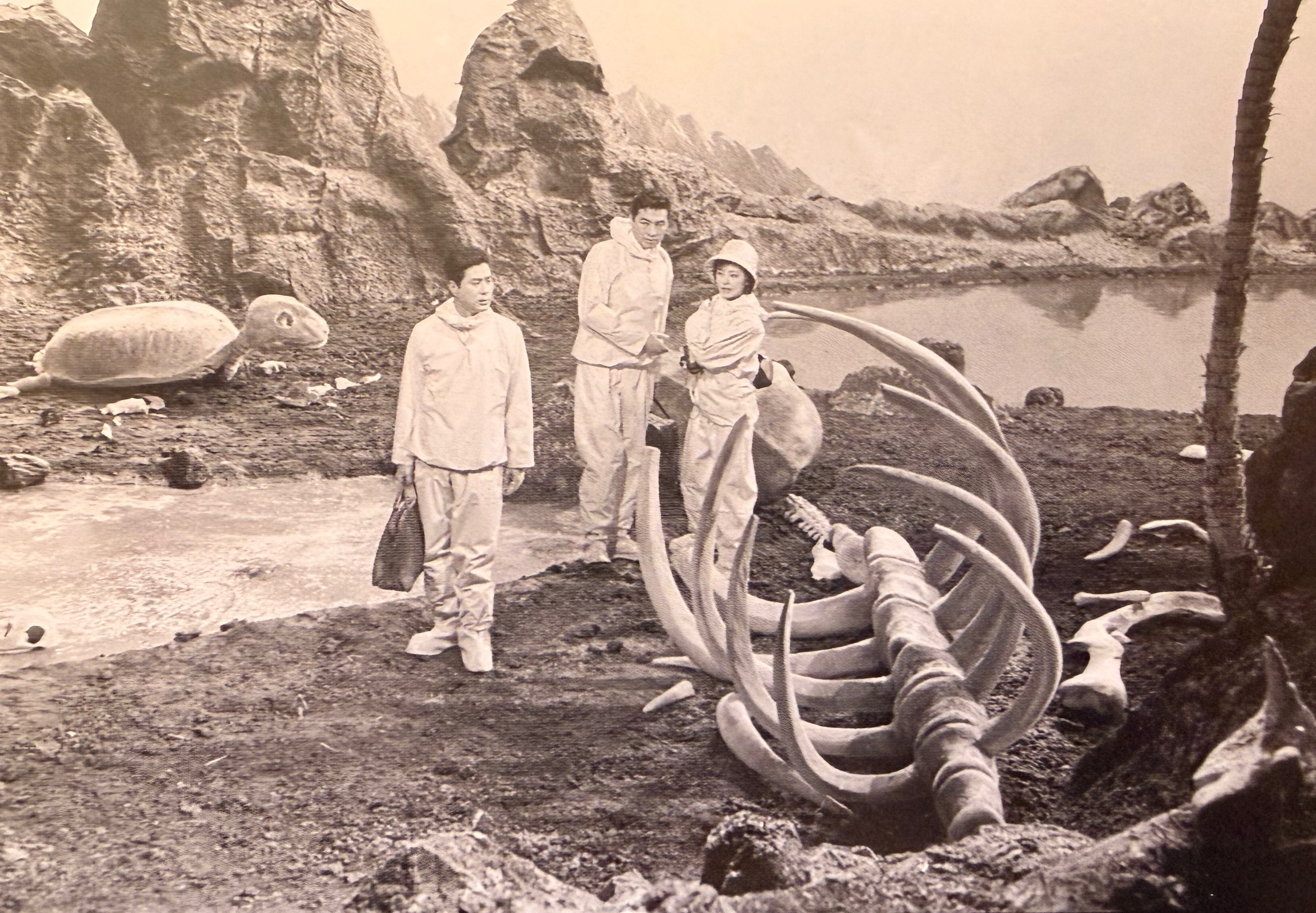
Referring to the cartoonish remains of Infant Island fauna, director Ishiro Honda reflected:
“I wanted to visualize the terror and the power of the atomic bomb,” director Ishiro Honda later said. “The first Infant Island scene was supposed to be more graphic and realistic, [but] the art department didn’t have enough budget to make the set that I wanted. As a director, I should have been more stubborn.” - pg 77, The First 70 Years
When imagining a better and more equitable, joyful future, we’re often told “that’s not possible,” or “that will never happen.” We are dismissed as naïve and ignorant.
We believe that to build better futures, we must be stubborn. We must push back on cynicism and resignation. We are building and shaping the future now, in the present. We can learn from Ishiro Honda: We should all be more stubborn, for the sake of the generations that come after us.
In the hallways of the Field Office, we have a poster that reads: “BE BLATENT. BE EMOTIONAL. RISK EVERYTHING.” This serves as a reminder to be more stubborn.
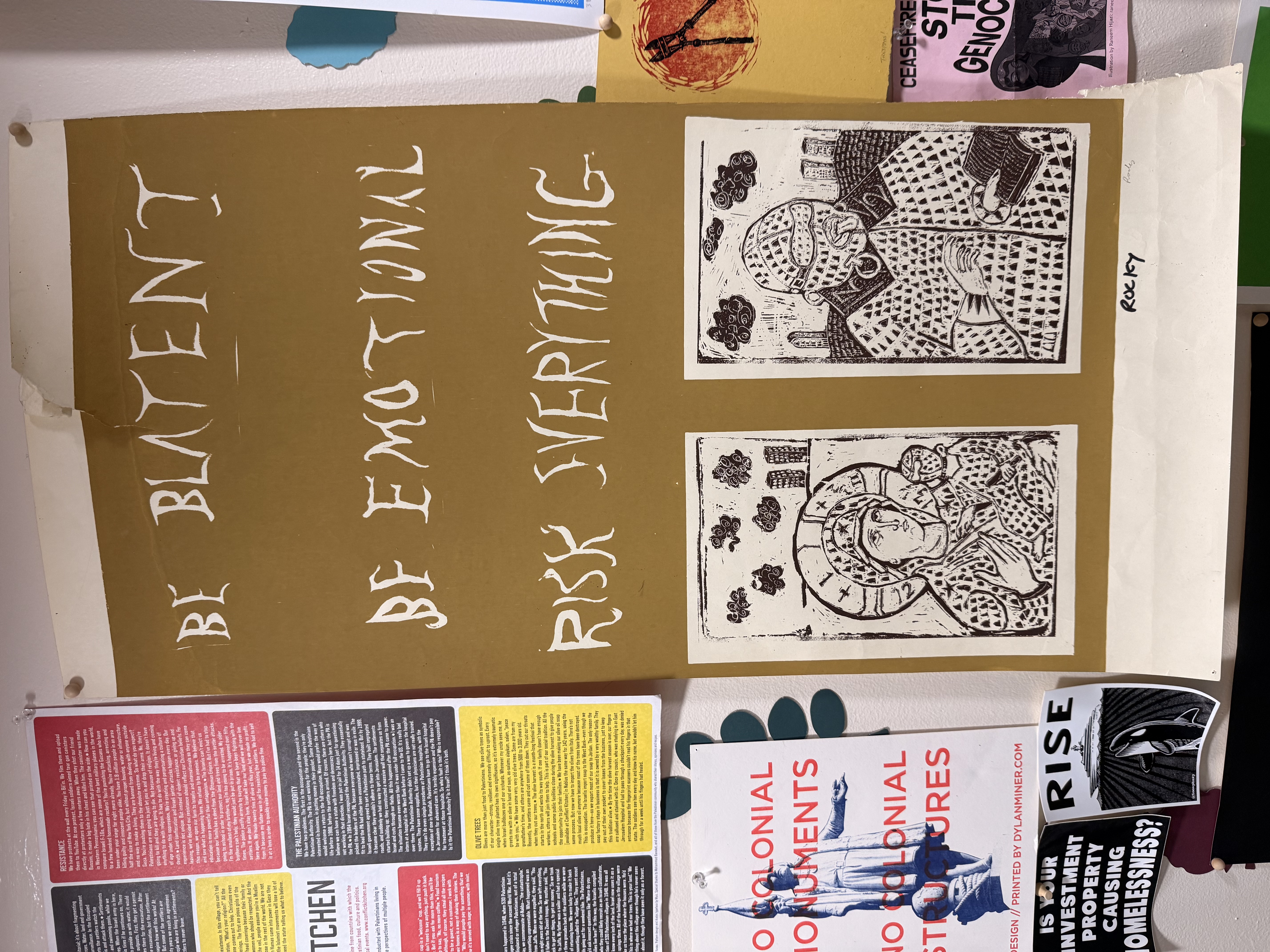
LESSON FOR HUMANITY No. 5: Eggs
We hope that—since we have complied with the directive to include other lessons for humanity—HQ will not redact this section.
Eggs.
Not only does the film prominently feature Mothra’s egg, but there is a reporter in the film, Jiro Nakamura (played by Yu Fujiki), who—several times—pulls a boiled egg out of his sportcoat pocket to eat. Sometimes he has hot sauce. Sometimes he has cutlery. He always has an egg. He is always prepared.

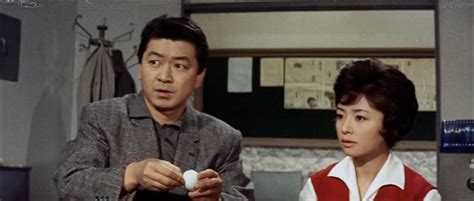
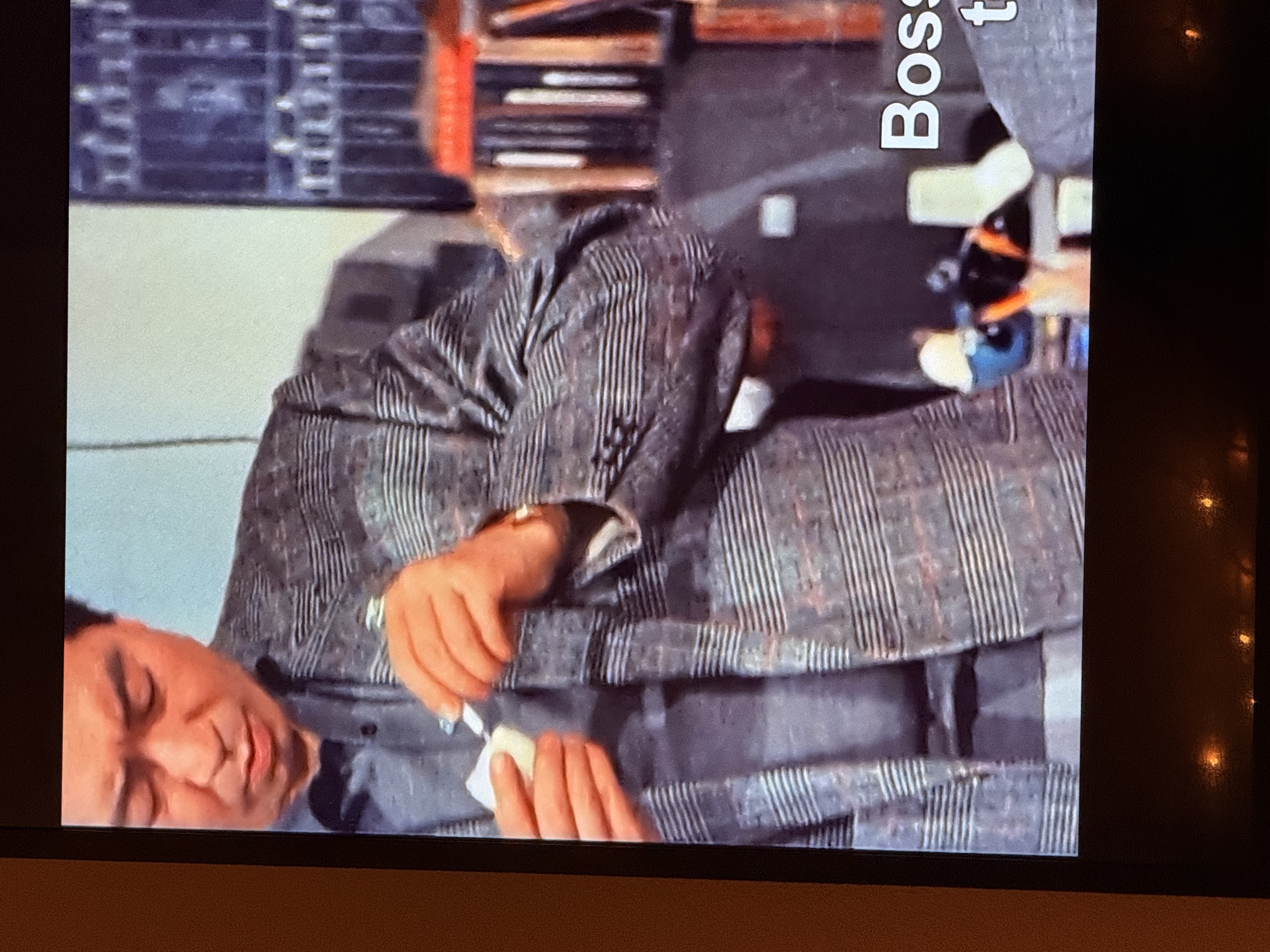
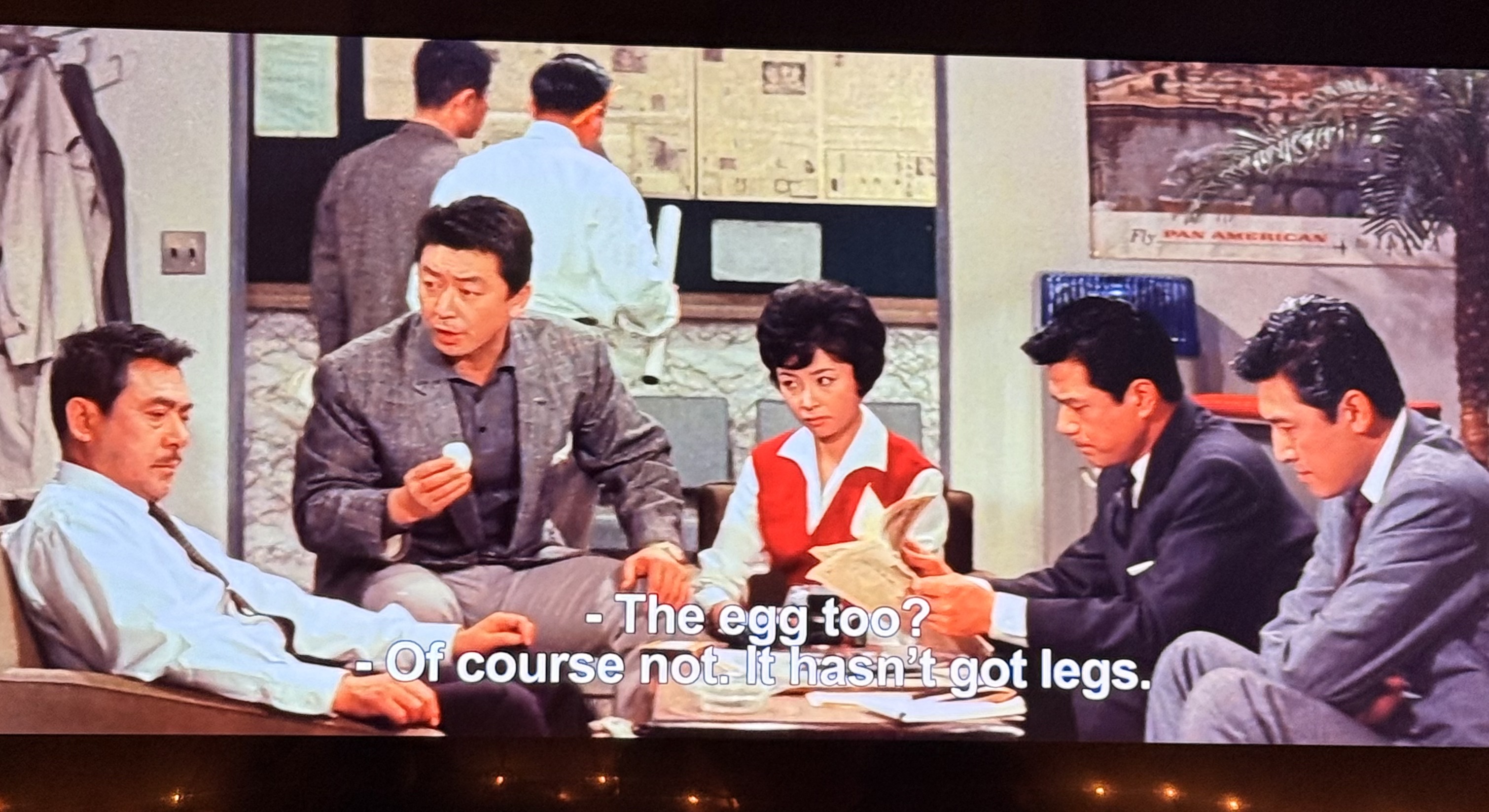
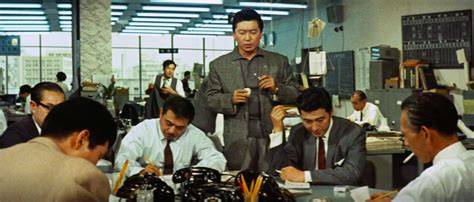
always eating egg (AEE)
We are looking forward to seeing how our colleagues in the Arts Department interpet these lessons. We believe that even if humanity implements just one of these lessons, the future will be more just, equitable, and joyful.
Yours in Science3,
The Godzilla Field Office
/ / / END OF TRANSMISSION
The mission team learned this “Long Now” formatting from the author and artist behind the publication called Seed & Signal™. Mission supporters are encouraged to subscribe. ↩
We would like to note that the Field Office Team does not believe in strict non-violence and supports the right of oppressed peoples to armed resistance against their oppressors. ↩
This mission is dedicated to the memory of Harvey Rowe. ↩